
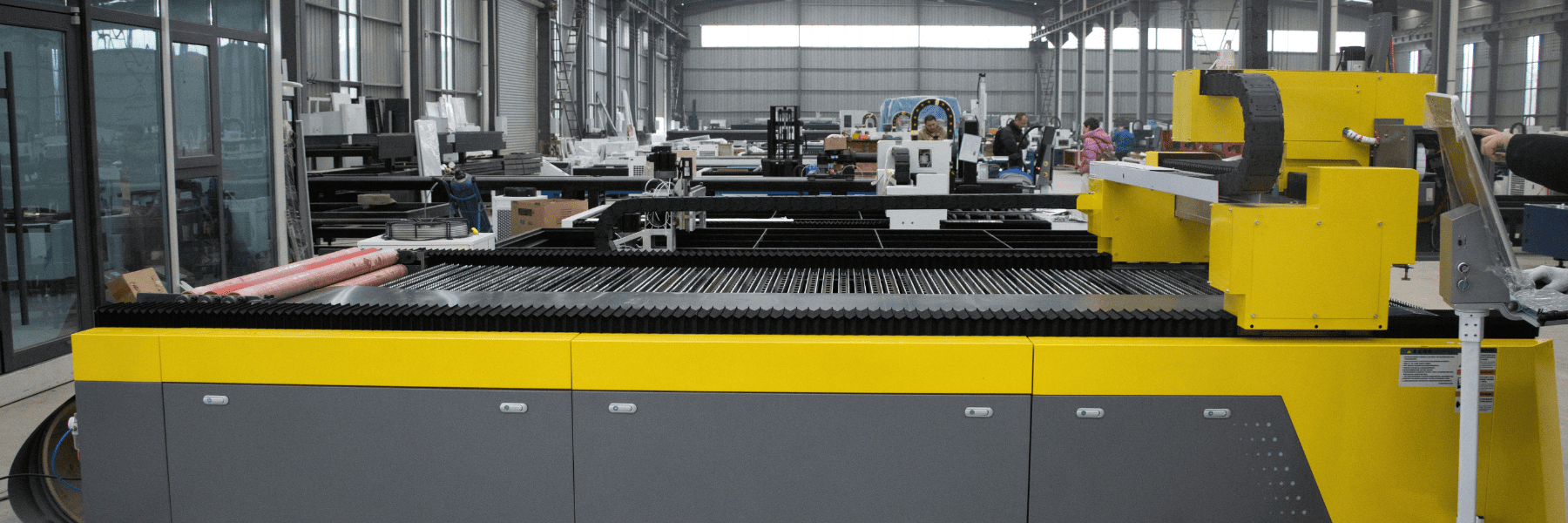
A transformer doesn’t hum because it is alive, but because its coils are in conversation with electricity. That conversation is written turn by turn, layer by layer. In factories today, that language is no longer handwritten by human hands. It is composed of CNC winding machines with mathematical precision.
From EV motors to aerospace systems, motor winding machines don’t just wind copper or Fiber; they quietly decide how reliably modern industry breathes.
Why precision winding has become a foundation of modern manufacturing
Manufacturing has moved away from manual winding methods toward automated, precision-driven systems. This shift is not just about speed, but about ensuring every coil behaves exactly the same under real operating conditions.
This change is driven by a few clear realities:
- Modern production volumes are significantly higher than in traditional manufacturing setups
- Electrical and electromagnetic components are more complex, compact, and performance-sensitive
- Even small variations in winding can lead to efficiency loss, heat build-up, or early failure in real-world use
- In such conditions, precision is no longer optional but a baseline requirement
This is where the CNC winding machine becomes a core enabling technology across industries, taking different forms based on application needs—such as CNC coil winding machine for general coil production, CNC transformer winding machine for power systems, CNC automatic coil winder winding machine for high-volume manufacturing, and CNC filament winding machine for composite structures.
How CNC automatic coil winder winding machine becomes the energy backbone
Electric power systems may appear as a large-scale infrastructure of substations, transmission lines, and distribution networks, but their performance depends heavily on a much smaller component: the precision-wound coil.
Role of winding in transformers and power distribution
Transformers rely on primary and secondary coils that are wound with extreme precision to enable electromagnetic energy transfer. Any variation in winding geometry can directly impact voltage transformation efficiency. Inductors, on the other hand, use tightly wound coils to regulate current flow and reduce electrical noise in power systems. In both cases, winding quality defines performance stability.
Importance of tight tolerances in high-voltage applications
High-voltage systems operate under conditions where even minor inconsistencies become critical. The spacing between coil layers, alignment of turns, and insulation placement must remain highly controlled. Small deviations can lead to insulation of stress, localized heating, or partial discharge, all of which reduce system reliability over time.
Reduction of energy loss through precision winding
Energy loss in electrical systems often originates at the coil level. Irregular winding increases resistance and creates uneven magnetic fields, leading to heat generation and reduced efficiency. Precision winding helps maintain uniform geometry, which in turn improves magnetic coupling and minimizes unnecessary energy dissipation.
Applications in transformers, inductors, and reactors
Precision-wound coils are essential across multiple components in the energy ecosystem. Power transformers handle large-scale energy transmission; distribution transformers manage localized supply networks, and inductors or reactors are used for current regulation and power conditioning in both industrial and utility systems.
Where CNC transformer winding machines fit in production lines
In modern manufacturing environments, CNC transformer winding machines are integrated directly into production lines to ensure repeatability and control. These systems enable consistent layer formation, controlled wire tension, and accurate coil geometry across large production batches. This reduces reliance on manual skill and improves scalability in high-voltage component manufacturing.
Driving the electric mobility revolution: EV motors and charging systems
As demand for electric vehicles grows, manufacturers are under pressure to build compact, efficient systems that can handle high power loads without loss in performance.
Role of coils in EV motors and charging systems
Coils drive almost every critical function in electric mobility. In traction motors, they generate motion; in alternators, they support energy conversion; and in charging systems, they regulate controlled power flow into batteries. Their performance depends directly on winding accuracy and consistency.
Need for high-speed, high-precision winding
EV production demands both volume and precision. Even minor inconsistencies in winding can affect motor balance, increase heat generation, and reduce efficiency. This makes automated systems essential for maintaining repeatable quality at scale.
Use of CNC coil winding machines in EV manufacturing
A CNC coil winding machine is widely used across EV production lines for:
- Stator and rotor winding in traction motors
- EV motor coil and magneto coil manufacturing with uniform geometry
- Charging station coil components requiring controlled precision
Link between coil quality and EV performance
Coil quality directly impacts key performance areas:
- Motor efficiency and energy conversion
- Heat management under continuous load
- Driving range and overall vehicle performance
Smart machinery applications of CNC winding machine
Industry 4.0 has transformed factories into interconnected systems where machines communicate, adapt, and operate with minimal human intervention. At the centre of this shift is automation hardware that depends heavily on precision electromagnetic components, highlighting the growing connection between winding machines and robotics manufacturing.
Robotic systems rely on coil-based elements such as servo motors, solenoids, and actuators. These components control motion, force, and response timing, making coil quality a direct factor in machine intelligence and reliability. As robots become smaller, faster, and more precise, the demand for compact and highly consistent coils continues to rise.
CNC automatic coil winder winding machine plays a key role in modern production environments by enabling stable, repeatable winding cycles that are essential for mass manufacturing of automation components.
Key benefits include:
- Repeatable production for large-scale deployment of robotic systems
- Reduced dependency on operator skill, improving process stability
- Faster scaling of automation lines with consistent output quality
Advanced applications of CNC winding machines
In high-value industries, there is no margin for error. Every component must perform flawlessly under extreme conditions.
Aerospace requirements
In aerospace systems, coils such as sensor coils must be lightweight yet extremely reliable. They operate under vibration, temperature fluctuations, and long mission cycles where failure is not acceptable. Precision winding ensures structural stability and consistent electromagnetic performance in these harsh conditions.
Medical devices
Medical technology depends on coil-driven systems used in imaging equipment and diagnostic devices. Here, coil accuracy directly influences signal clarity and measurement reliability, making consistency critical for patient-facing outcomes.
Electronics and communication systems
Modern sensors, communication modules, and compact electronic devices rely on stable micro-coils. These coils must maintain performance in highly compact spaces with minimal interference, where even minor variation can disrupt functionality.
Micro-coils and ultra-precision winding
As devices shrink, micro-coils require extremely controlled winding processes. The CNC winding machine supports this shift by enabling precise, repeatable production at microscopic scales while maintaining strict quality standards.
Emerging frontiers: composite materials and CNC filament winding machine applications
Winding technology is no longer limited to electrical coils. It is increasingly used in structural manufacturing, where Fibers are wound to create high-strength, lightweight composite components for advanced engineering applications.
Filament winding is a process where continuous Fibers, coated with resin, are precisely wound over a rotating mandrel to form strong, durable structures. This method is widely used in pressure vessels, industrial pipes, cylinders, and aerospace composite structures.
A CNC filament winding machine enables controlled Fiber placement and repeatable production, ensuring accuracy across complex geometries and large batches.
CNC control is critical because it ensures proper Fiber alignment, consistent layer build-up, and uniform structural strength. Even small deviations in winding paths can significantly affect performance and safety.
Winding is no longer just an electrical process. It has become structural engineering driven by precision; to explore the right CNC winding solutions for your application, contact Synthesis Winding Solutions today.
Frequently Asked Questions
1. What is a CNC winding machine used for?
It is used for precise, automated winding of coils in transformers, motors, electronics, and composite structures.
2. Where are CNC coil winding machines commonly used?
They are widely used in EV motors, transformers, robotics, aerospace systems, and precision electronic devices.
3. Why is precision important in coil winding?
Precision ensures efficiency, reduces energy loss, improves reliability, and prevents performance failures in critical applications.